Founded in 2011 Carbide cutting tools ISO 9001:2015
E-mail: cj-xuan@rambler.ru
RUEN中文
APPLICATIONS / TECHNICAL SELECTION

From Material and Operation to a Stable Process

This page goes beyond catalog links. It provides tool-selection paths: what matters in each application, which series fit, and when a material filter is no longer enough.

01
Material and HardnessGrade, condition, coating or heat treatment of the workpiece.
02
Operation and AccessStock, depth, overhang, toolpath and access to the cutting zone.
03
Required ResultTool life, productivity, accuracy and surface quality.
02 / SELECTION LOGIC

Start with Cutting Conditions, Not a Part Number

The same material may need different geometries for slotting, deep cavities or finish contouring. Selection therefore starts with at least three groups of inputs.

01

Describe the Material and Its Condition

Provide the exact grade, hardness, blank-production method and heat-treatment state. “Steel” or “aluminum” is only the starting point.

02

Define the Operation and Tool Engagement

Slotting, side cutting, deep cavities, contouring, drilling and form features create different loads and chip-evacuation demands.

03

Set Machine Constraints and Success Criteria

Spindle speed, rigidity, coolant, overhang, required roughness and expected tool life determine the final geometry and cutting data.

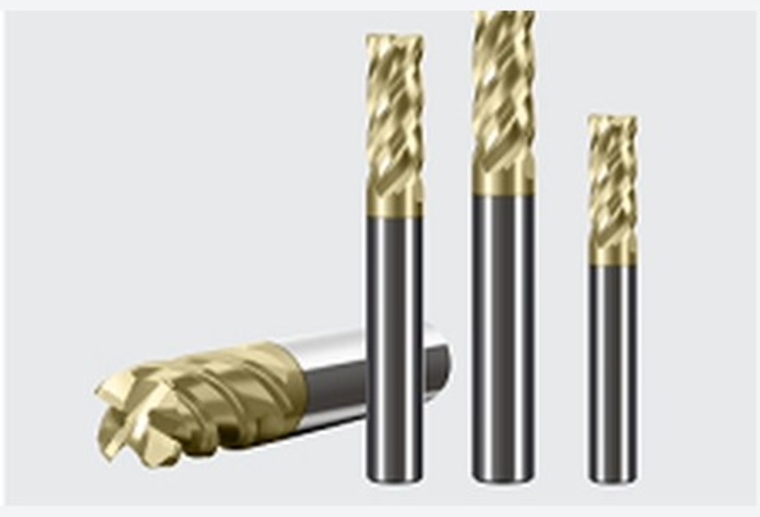
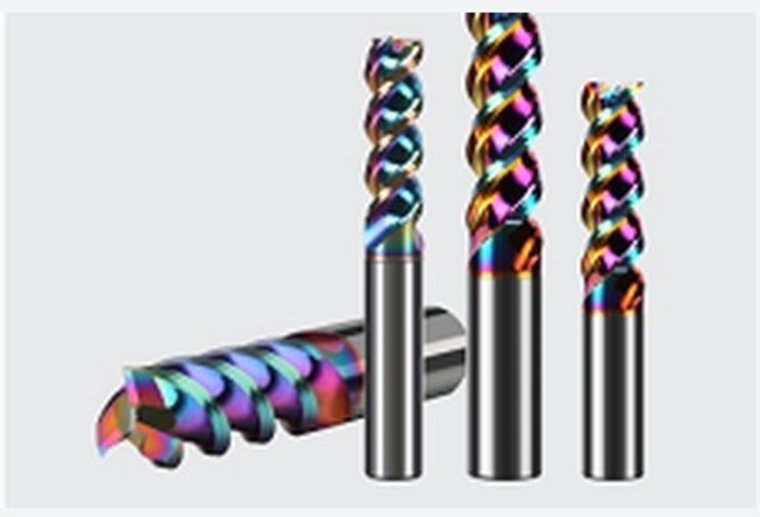
UA+ series for high-efficiency aluminum machiningUA+ / CERAMIC
01 / ALUMINUM AND NON-FERROUS METALS

High-efficiency Machining of Aluminum and Non-ferrous Metals

Speed alone does not solve aluminum machining. Open chip space, polished flutes and low cutting-edge friction are critical.

UNCUT STOCKForged and cast aluminum with Si < 12%, copper and graphite
OPERATIONSSlotting, facing, side milling, plunging and ramping
PRIMARY RISKBuilt-up edge, chip packing and rising temperature
UA+ combines a 3-flute 50° U-groove, polishing and DLC coating to reduce built-up edge.
The ZrO₂ ceramic series is intended for aluminum, copper and graphite; polished flutes reduce friction.
For thin walls or long overhangs, first verify system rigidity and allowable radial load.
Recommendation basis: 2026 catalog · pp. 001–002, 005–006View Suitable Tools →
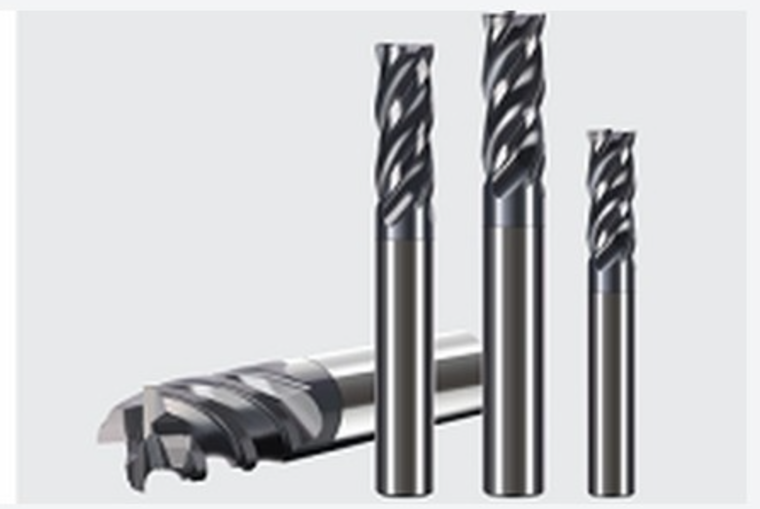
UP+ series for stable steel machiningUP+ / U6065 / CERMET
02 / GENERAL-PURPOSE MACHINING

Stable Machining of Steel, Stainless Steel and Cast Iron

A broad part mix needs more than one “universal” item; it requires a balance of vibration resistance, core strength, helix angle and coating.

UNCUT STOCKCarbon and alloy steel, stainless steel, gray and ductile cast iron
OPERATIONSSlotting, facing, side, trochoidal and ramp milling
PRIMARY RISKVibration, unstable load and difficult chip evacuation
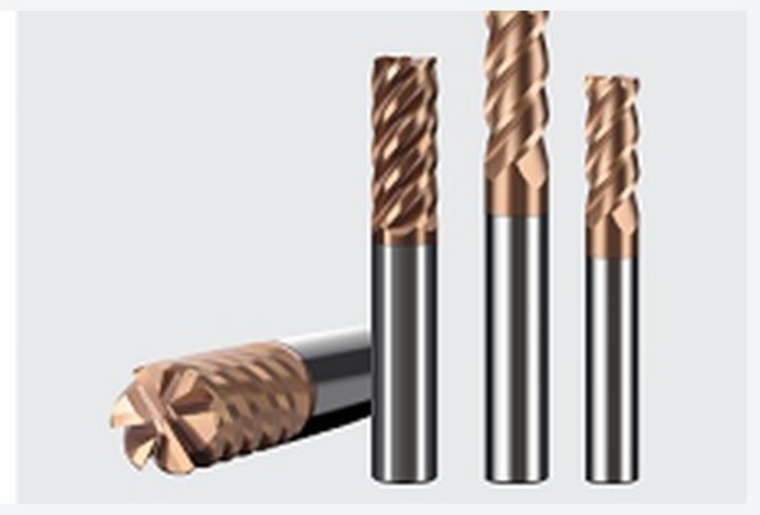
UP+ uses unequal pitch and a variable helix; the series also supports dynamic milling.
U6065 adds a high helix and a balance of toughness and hardness for a wide operating range.
TiCN cermet supports high-speed machining and clean surfaces in steel, stainless steel and cast iron.
Recommendation basis: 2026 catalog · pp. 003–004, 007–010View Suitable Tools →
SS35 Series for Heat-resistant AlloysSS35 / ISO S
03 / HEAT-RESISTANT ALLOYS

Heat-resistant Alloy Machining with Thermal and Chip Control

In nickel and iron-nickel alloys, tool life depends not only on hardness but also substrate heat resistance, edge impact strength, flute capacity and coating performance at high temperature.

UNCUT STOCKNickel and iron-nickel heat-resistant alloys; titanium after grade confirmation
OPERATIONSRoughing, side, trochoidal and ramp milling
PRIMARY RISKThermal load, edge chipping and chip recutting
SS35 uses unequal pitch and helix to reduce vibration, plus an enlarged chip flute.
The heat- and impact-resistant substrate supports rough stock removal, while hot hardness supports finishing.
The composite nano coating improves lubricity, heat dissipation and edge performance at elevated temperature. Titanium cutting data is confirmed separately.
Recommendation basis: 2026 catalog · pp. 011–012View Suitable Tools →
SH series for hardened-steel machiningSH / CERMET / ISO H
04 / MOLDS AND HARD MATERIALS

Molds and Hardened Steel at 45–65 HRC

In mold machining, selection depends on the stage: high-speed repeat machining, semi-finishing, finish contouring and deep cavities need different geometries and overhangs.

UNCUT STOCKTool steel, pre-hardened and hardened steel at 45–65 HRC
OPERATIONSSemi-finishing and finishing, contours, cavities and complex surfaces
PRIMARY RISKDeflection, edge chipping and loss of surface quality
SH combines a reinforced core, large wedge angle and unequal geometry for rigidity and edge protection.
The cermet series supports high-speed repeat mold machining without requiring a coating.
Flat, ball-nose or corner-radius ends are selected by stock, surface transitions and cutting-zone access.
Recommendation basis: 2026 catalog · pp. 003–004, 013–014View Suitable Tools →
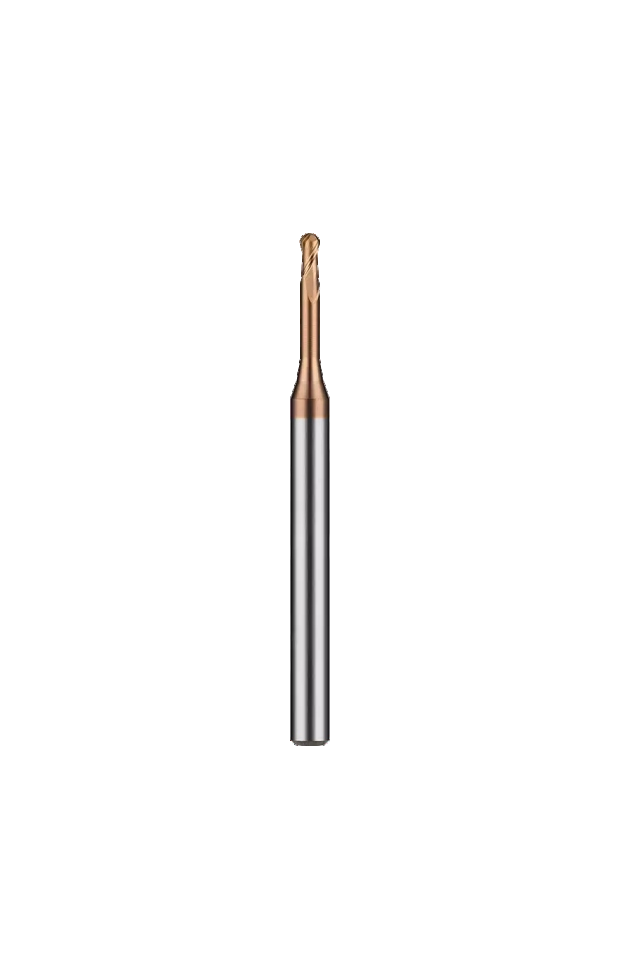
Long-neck ball-nose end mill for deep cavities55–68 HRC / FORM
05 / DEEP CAVITIES AND COMPLEX PROFILES

Deep Cavities, Narrow Zones and Form Features

When access is the constraint, a material filter says little. Neck length, overhang, clearance diameter and the required surface form become essential.

UNCUT STOCKMold steel up to 65 HRC, 304/316/316L stainless steel and copper electrodes
OPERATIONSDeep pockets, T-slots, dovetails, internal radii and spherical contours
PRIMARY RISKNeck deflection, holder collision and loss of profile accuracy
Long-neck series are material-specific: 68 HRC for heat-treated mold steel up to 65 HRC, 60 HRC for 304/316/316L, and 58 HRC for electrodes and mold materials.
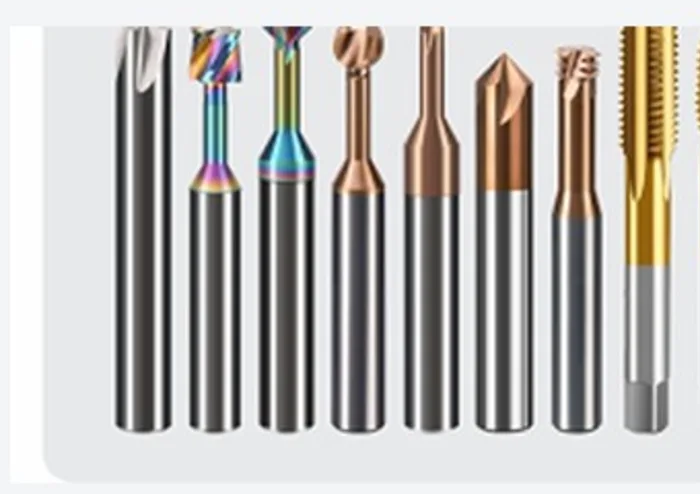
The form-tool range includes up/down chamfering, T-slots, radiused T-slots, dovetails, internal radii and lollipop cutters.
If a standard profile or neck length cannot provide safe access, geometry is refined from the part drawing or 3D model.
Recommendation basis: 2026 catalog · pp. 103–130View Suitable Tools →
Custom cutting tool from a drawingDRAWING / SAMPLE / CUSTOM
06 / HOLES AND CUSTOM OPERATIONS

Drilling and Custom Tools from Drawings

The source drawings cover not only standard end mills, but also a 140° drill at 3D depth and a combination tool with multiple diameters and steps.

UNCUT STOCKAccording to the exact part grade, condition and hardness
OPERATIONSSpotting, 3D drilling, steps, chamfers and combined profiles
PRIMARY RISKConcentricity, tolerance stack-up and overload at transitions
For a standard hole, first define diameter, depth, material and stable chip-evacuation capability.
A stepped or combined profile requires the part drawing, tolerances, required roughness and tool-magazine constraints.
Development includes sample testing, cutting-data confirmation and refinement for tool life and machining quality.
Recommendation basis: Mingtaishun technical drawings · 140° drill and combination toolView Suitable Tools →
03 / QUICK CATALOG ACCESS

When You Only Know the Workpiece Material

Use the filter as a first step, then refine the operation, hardness, overhang and output requirements.

04 / ENGINEERING REQUEST

When a Standard Filter Is Not Enough

For deep cavities, thin walls, complex profiles, difficult alloys or combined operations, share the inputs with an engineer. The solution can be sample-tested and refined for tool life, machining quality and purchasing plans.

01Workpiece material, grade and hardness
02Part drawing or machining-zone sketch
03Operation, depth, width and stock allowance
04Machine, spindle, coolant and overhang
05Current tool, cutting data and tool life
06Accuracy, roughness and purchase volume

Need Help Selecting a Tool?

Send the workpiece material, hardness, machine type and machining requirements to receive a technical proposal.

Request a Quote Explore Products